
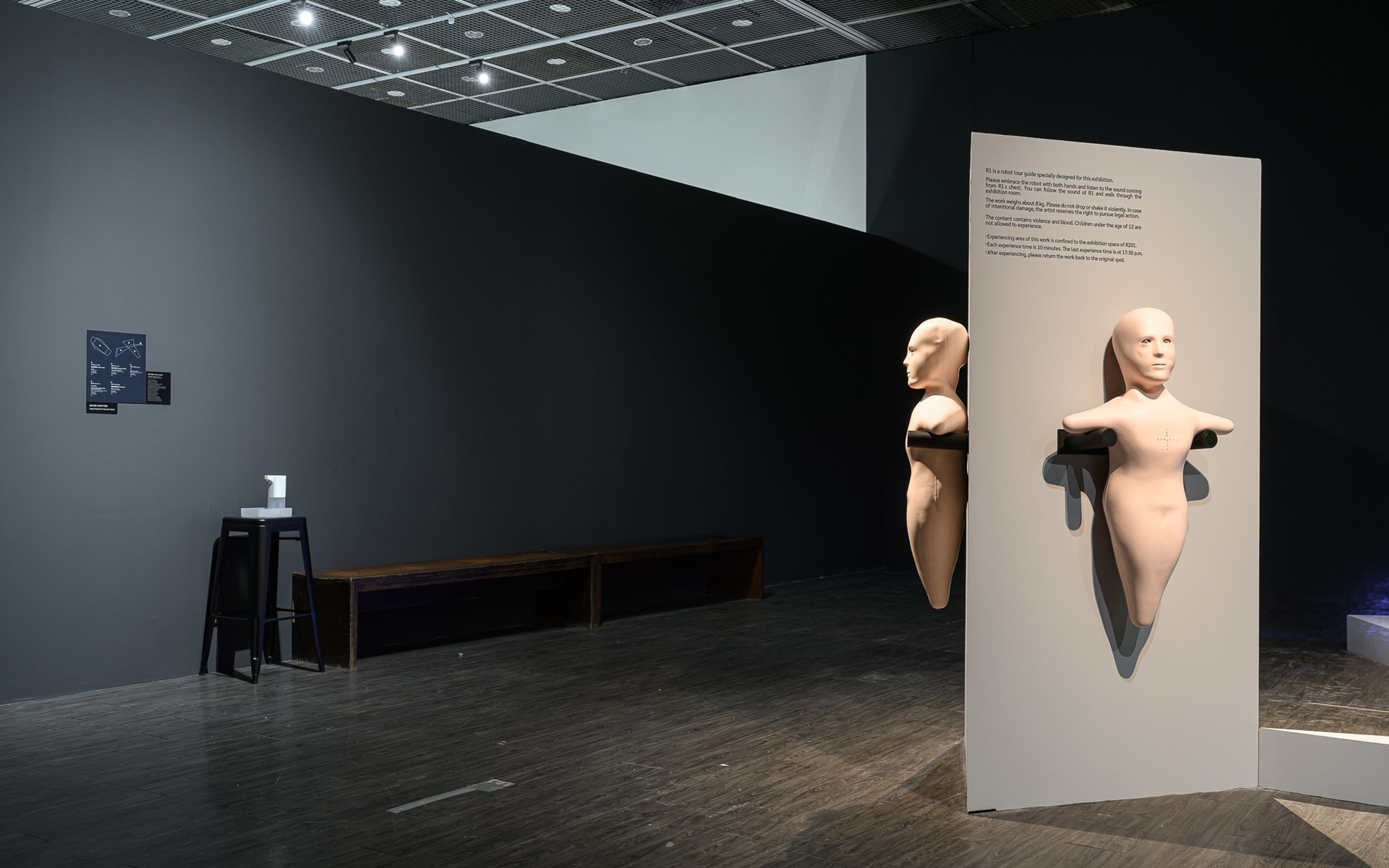
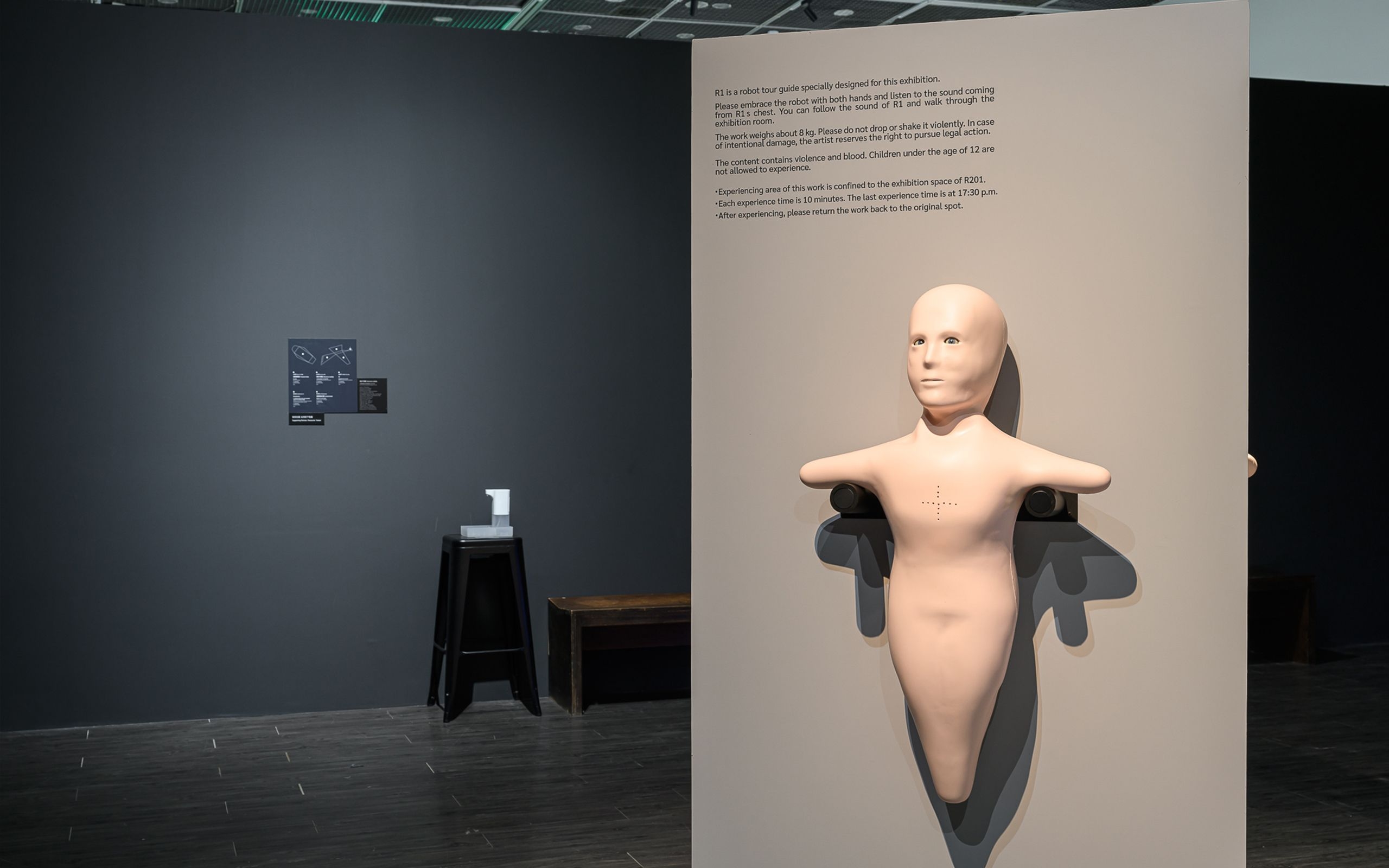
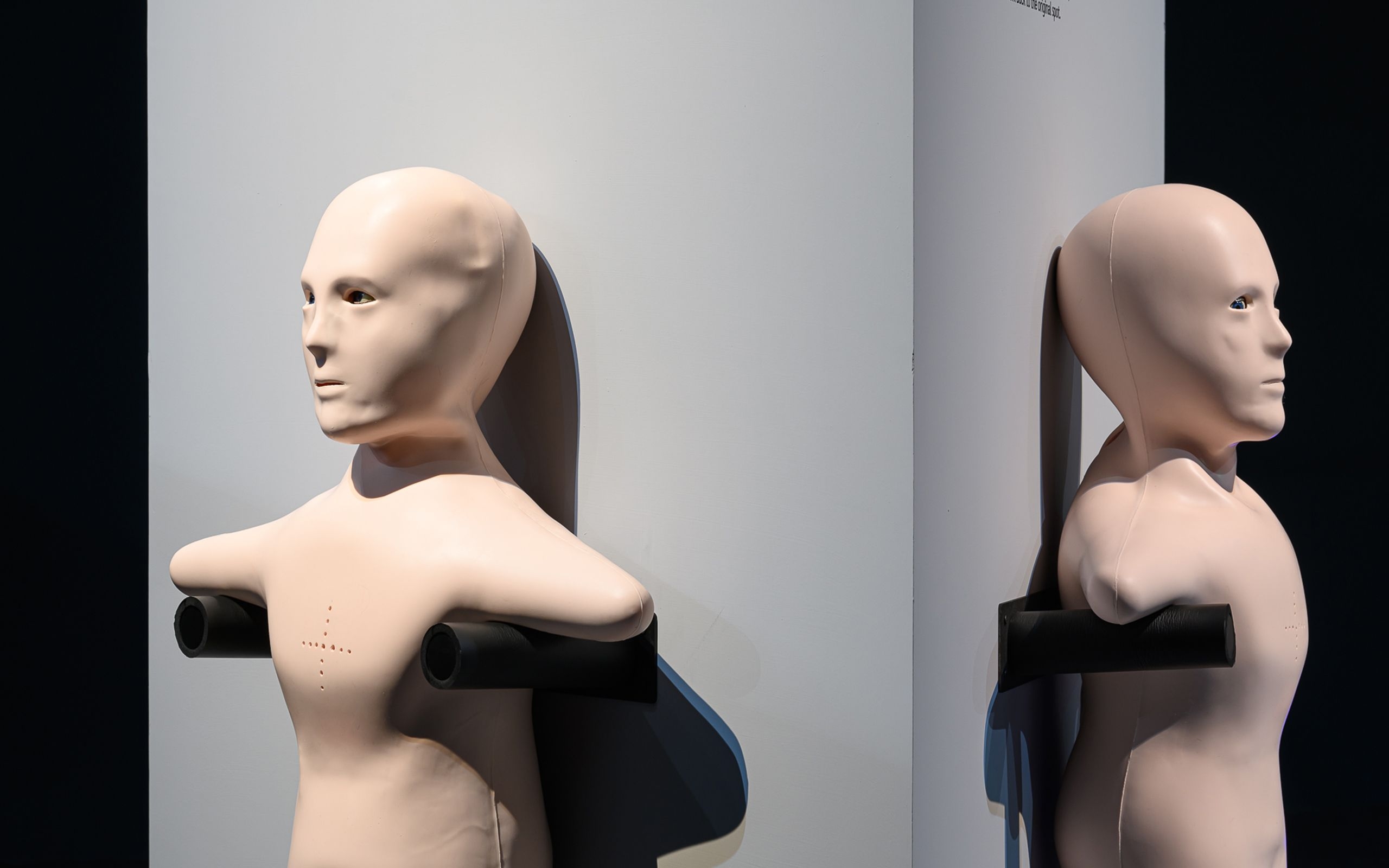
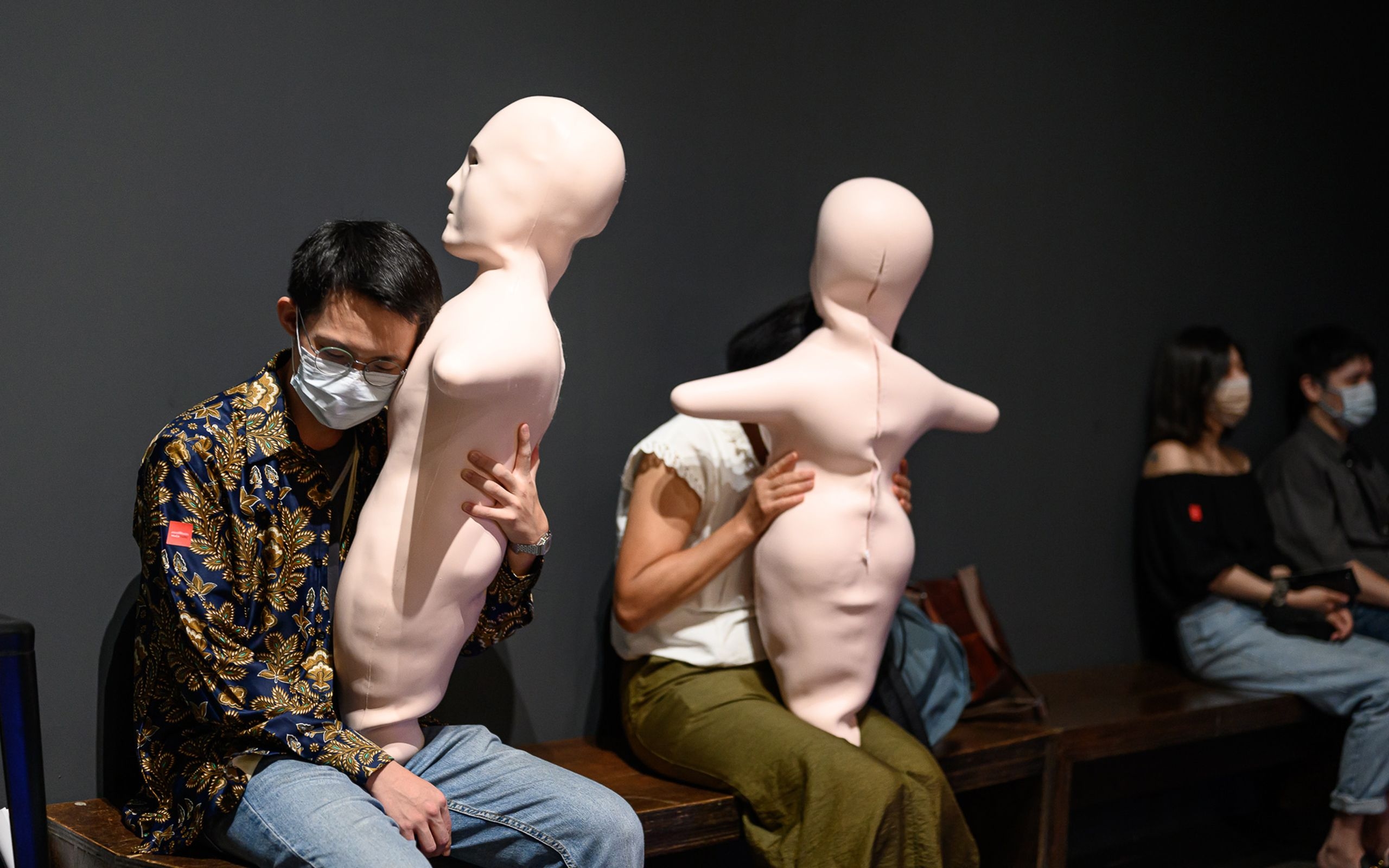
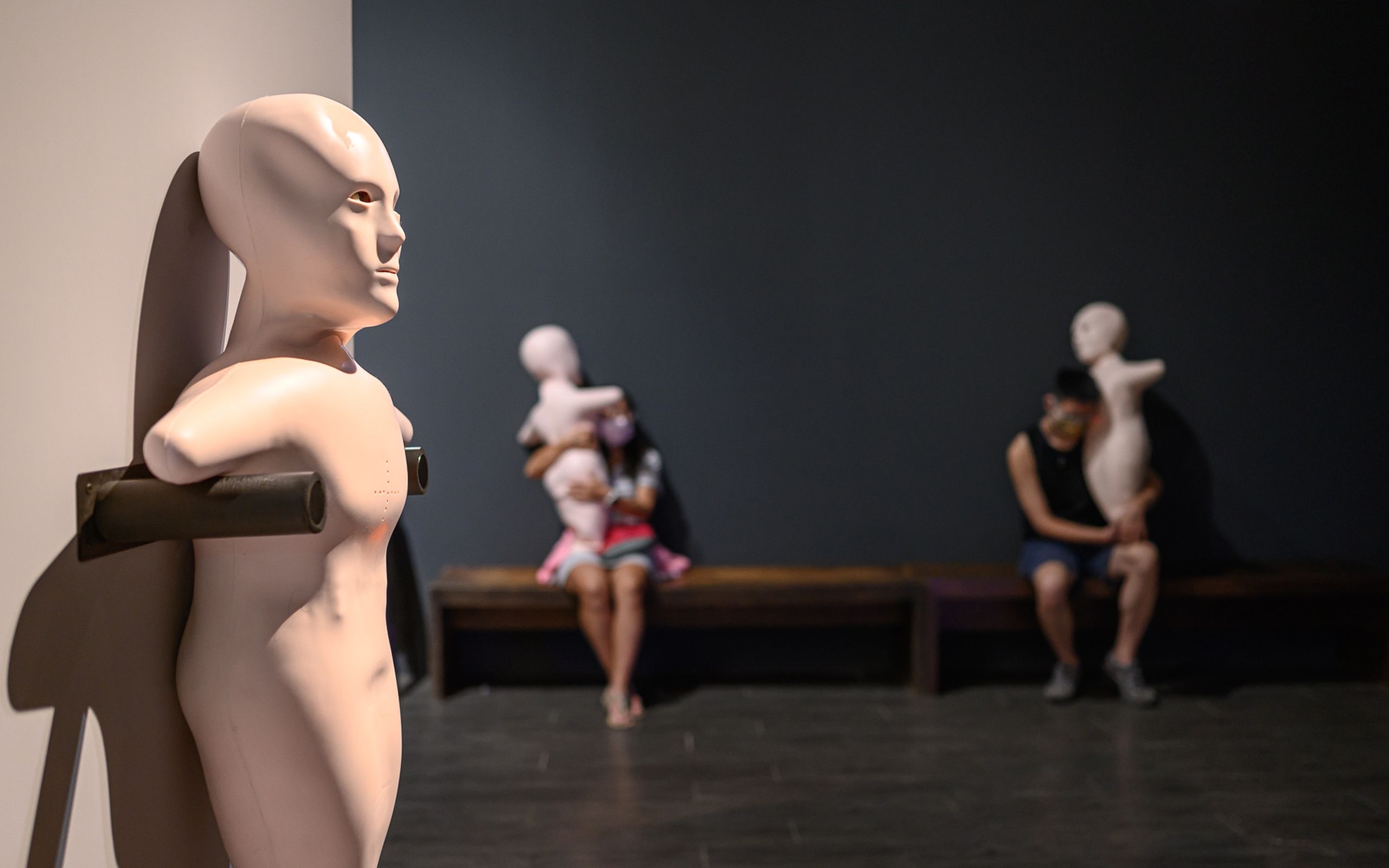
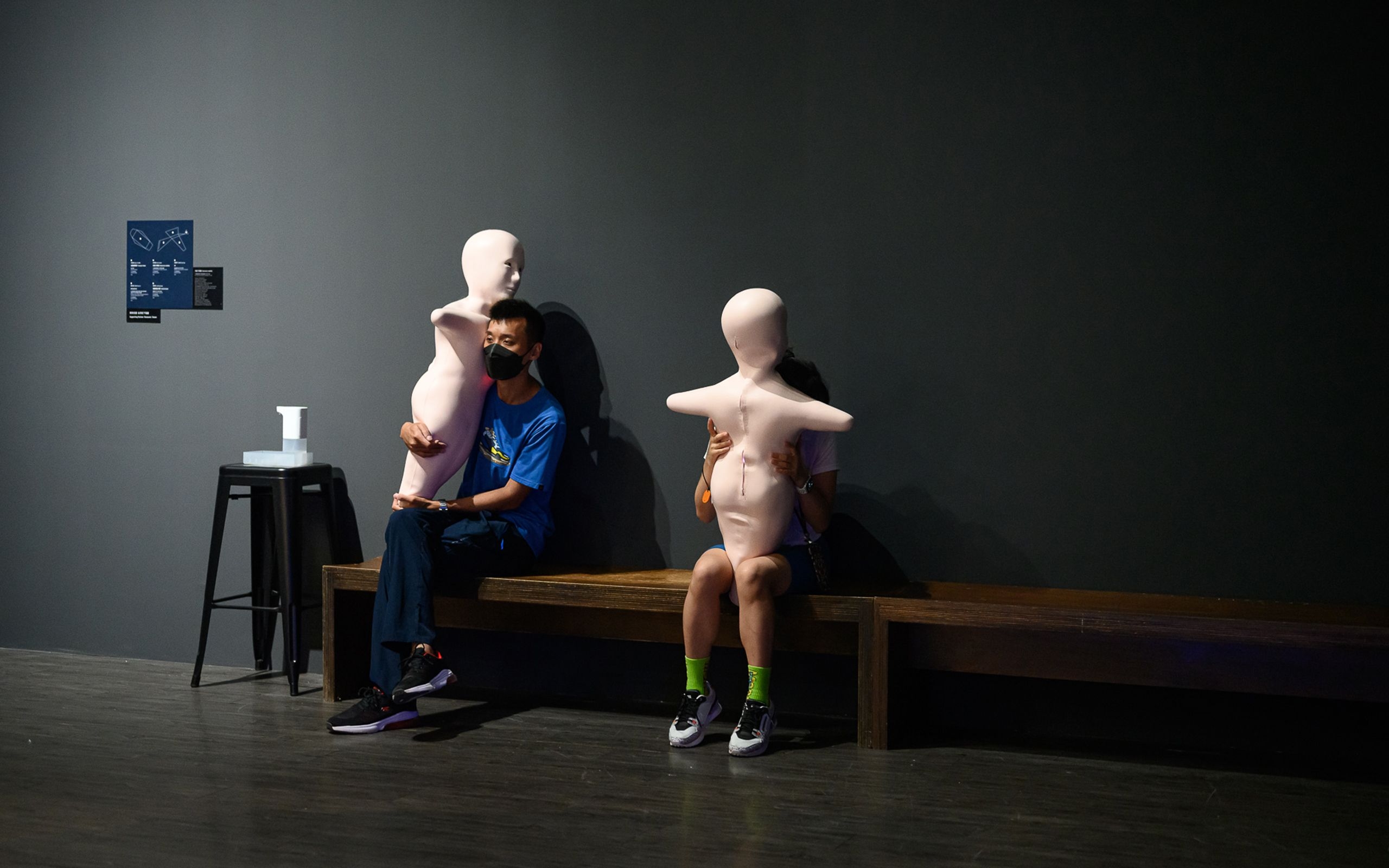
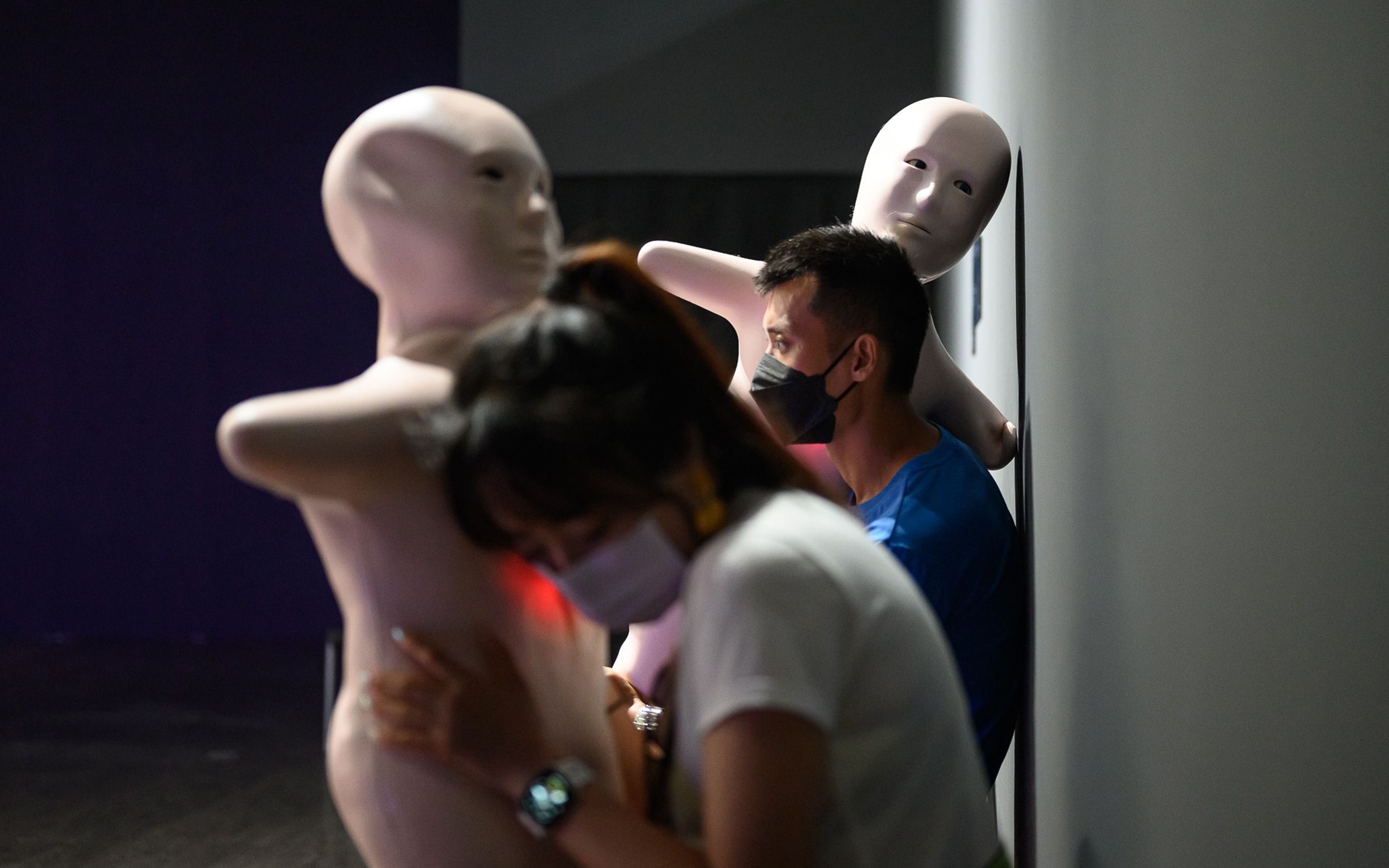
R1 is inspired by “Telenoid R1,” a robotic system produced by the Japanese inventor, Ishiguro Hiroshi. Although the system failed in the end, CHANG Ting-Tong employs the feature of the robot – “the uncanny lifelikeness,” to engage the audience in a deep exploration of the relationship between humans and technology. In the exhibition, three robots suspended in the air can be seen. Their customized silicon skin layer creates a more delicate tactile feeling. These robots are implanted with a speaking device. When sounds are made by these eerie robots, which indeed look like spirits, the audience is prompted to contemplate the essence of humanity and the nature of existence. This work reveals the future development of humanoid androids, as they will evolve to possess human-like appearance, characteristics, feelings, and personalities. This is bound to destabilize the definition of “being human” and further expose the complicated relationship between contemporary people and technology, one that is characterized by both fear and co-dependence.
Exhibited at the Museum of Contemporary Art Taipei (MOCA Taipei), 2022
Concept and Design: Ting-Tong Chang|Installation Fabrication: Jason Keng, Kuo-Wei Lin|Sound Design: Zi-Ming Feng|Interaction Design: Ting-Tong Chang|TTC Studios Manager: Ray Wang|Commissioned by: Hong Foundation|Photography: ANPIS PHOTO
https://hongfoundation.org.tw/events/4
https://artemperor.tw/focus/4968
https://www.rti.org.tw/news/view/id/2141418
https://www.artist-magazine.com/edcontent_d.php?lang=tw&tb=9&cid=48&id=20057