Crystal Seeding
等晶播種
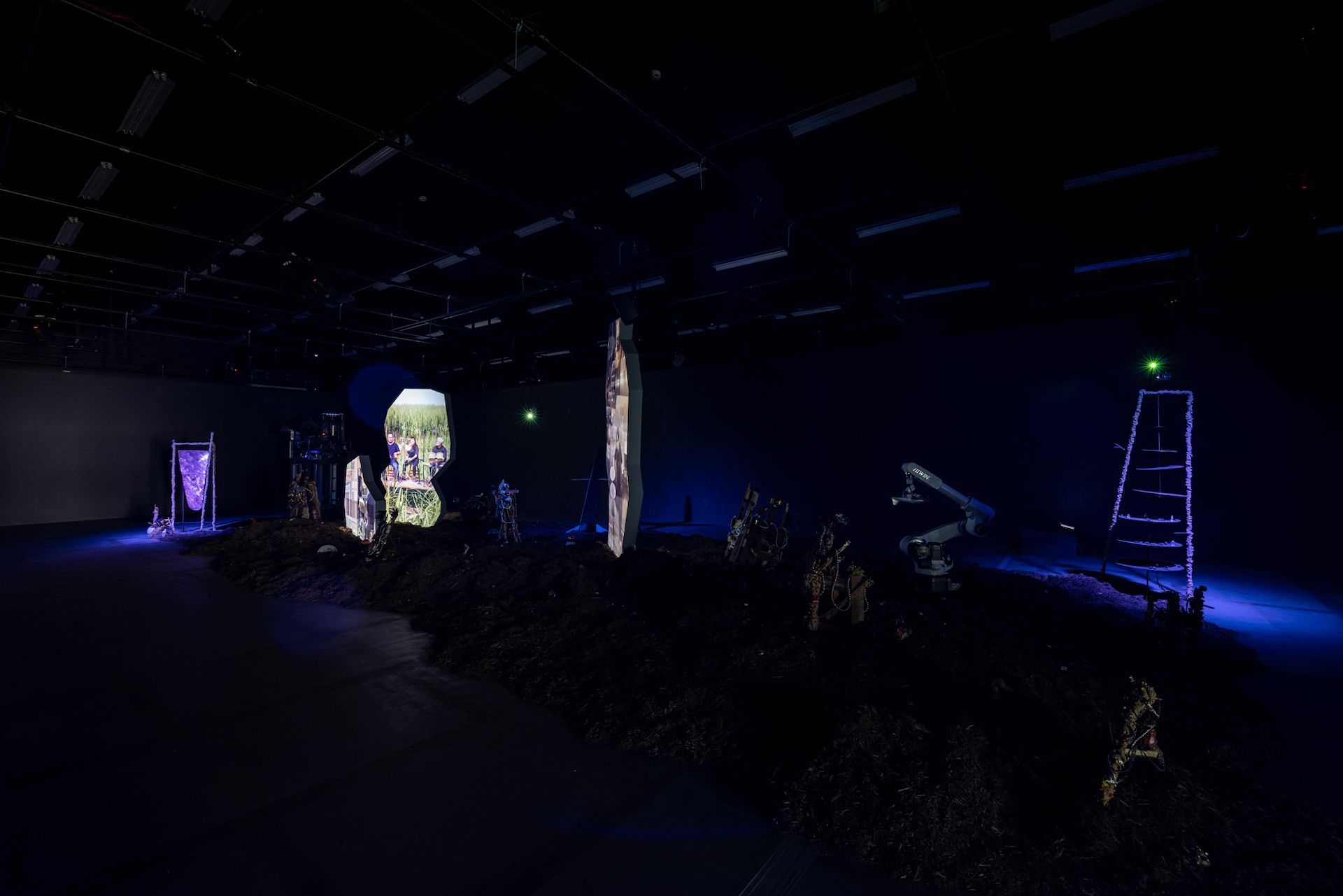
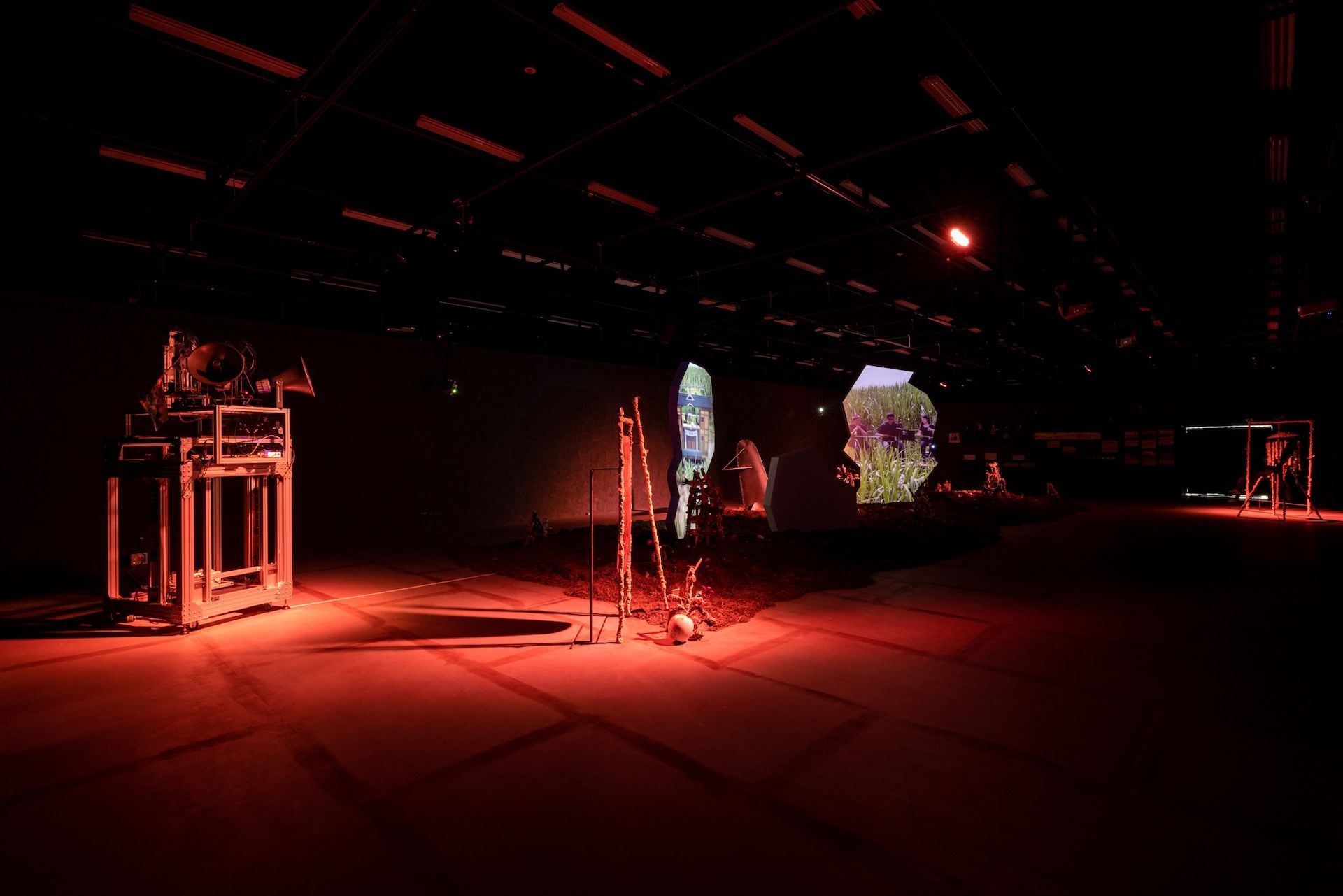
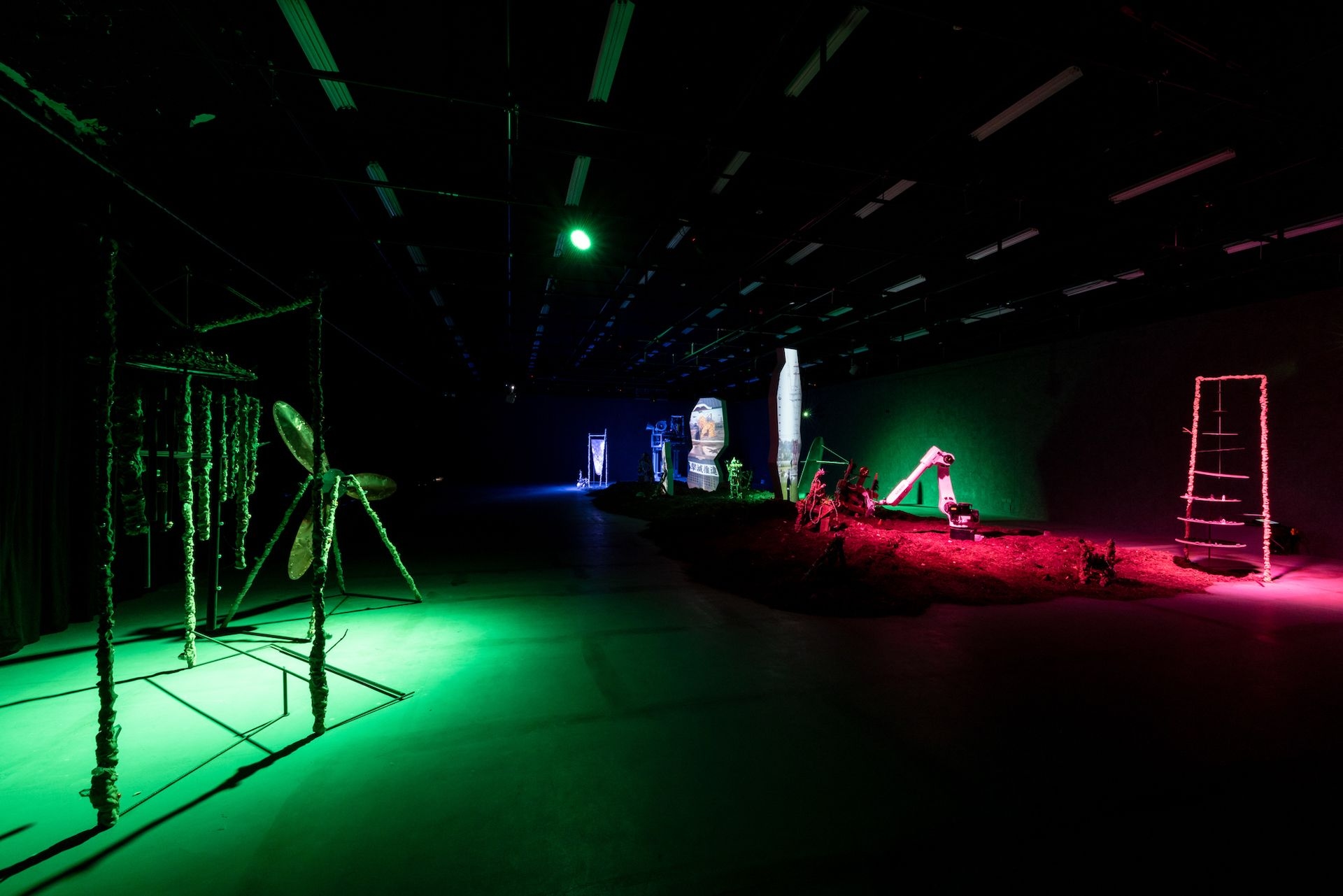
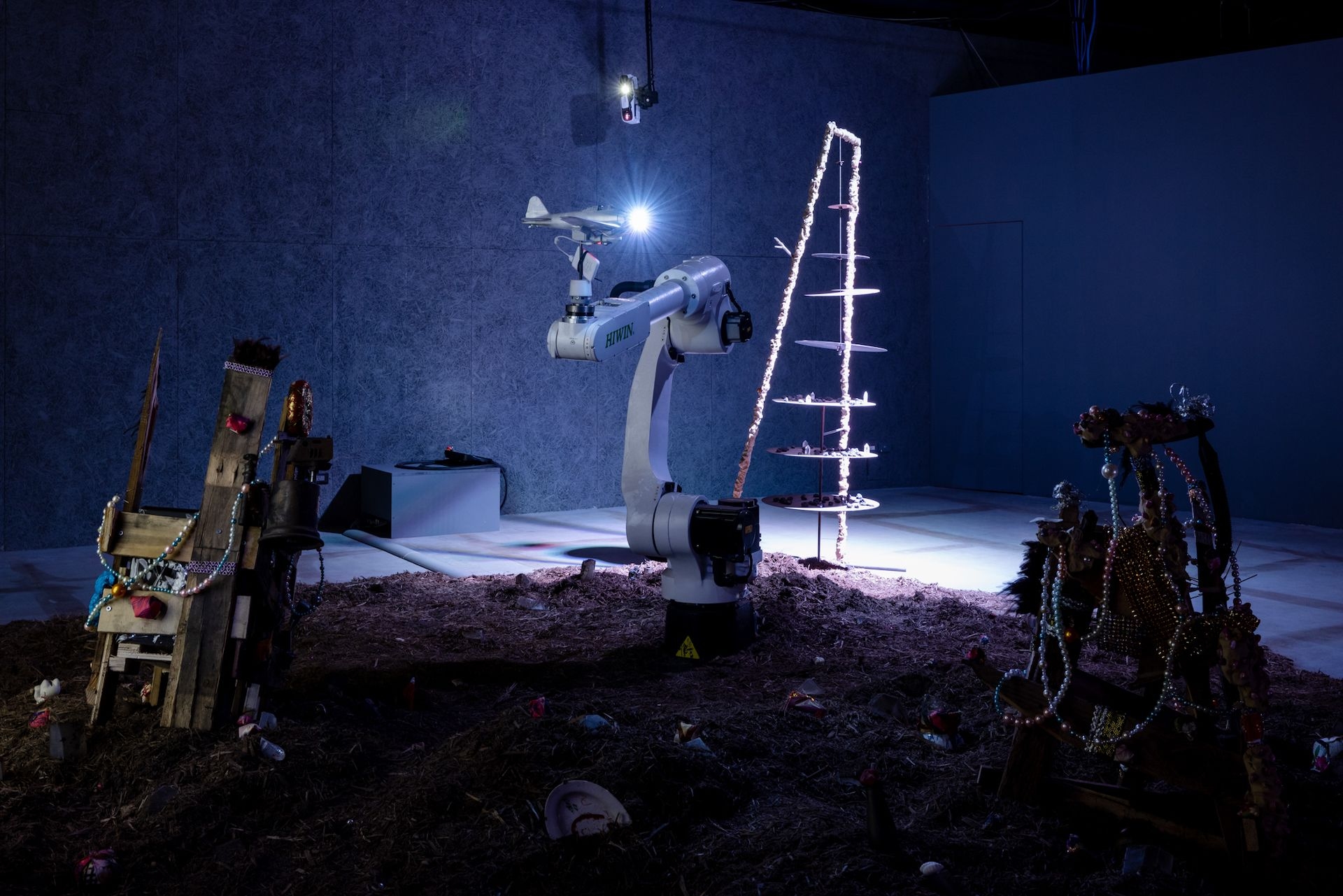
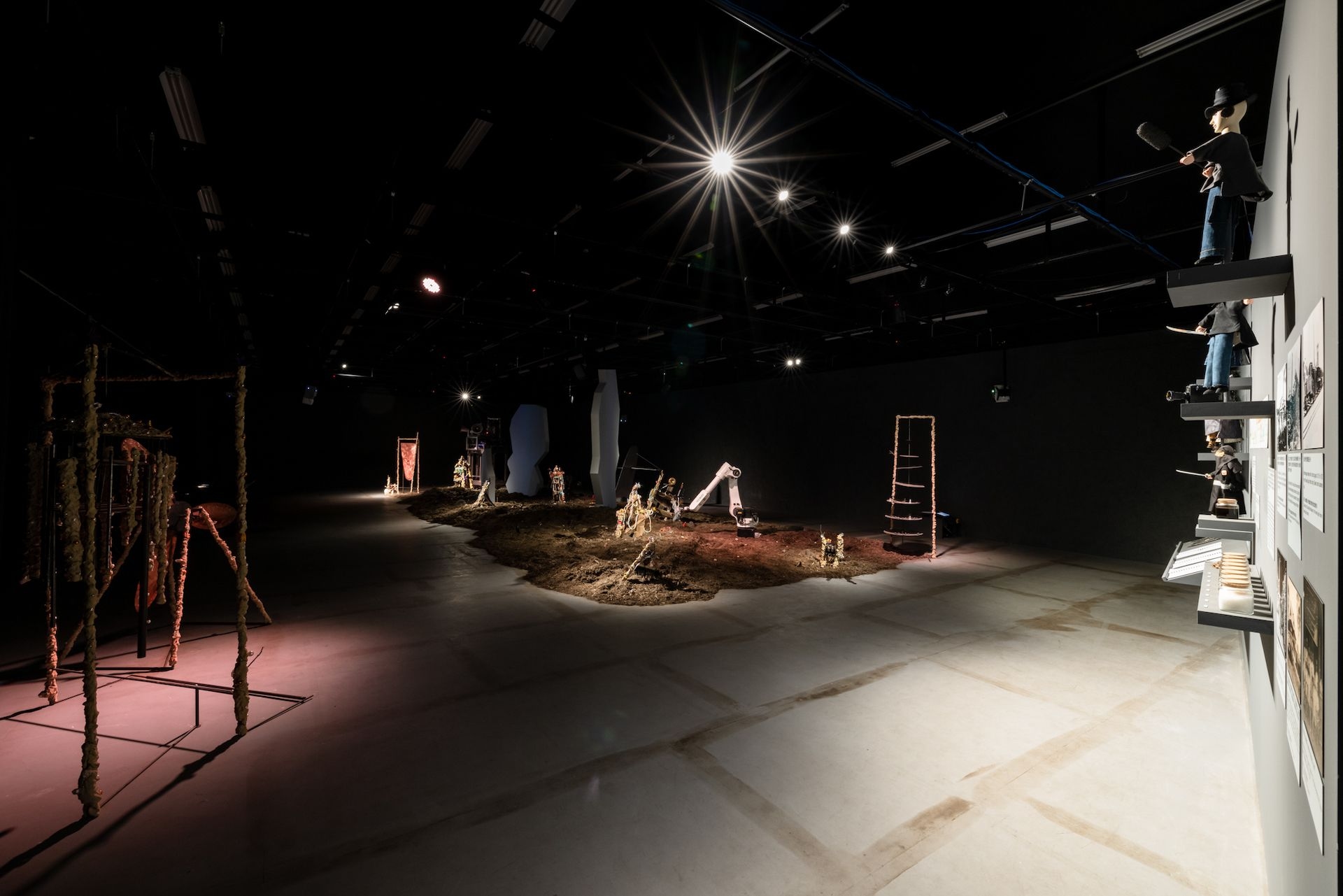
3D printing installation, robotic arm installation, instrument installation, three-channel video installation, 32’15”
3D列印裝置、機械手臂裝置、樂器裝置、三頻道錄像裝置,32分15秒,
2021

Crystal Seeding is a collaborative project by three artists, Hsu Chia-Wei, Cheng Hsien-Yu, and Chang Ting-Tong. Over the course of two years (2020-2021), the artists conducted research at the Huwei Sugar Factory, using the production of sugarcane as a starting point to explore how Huwei Town rose to prominence during the Japanese colonial era. Corporations, such as Dai-Nippon Sugar Manufacturing Co., Ltd., brought the mechanized sugar industry to Taiwan's agricultural heartland and started the process of industrialization. During World War II, the sugar industry was transformed into a military industry. Sugar molasses, originally a byproduct of sugar production, was fermented to become alcohol that powered fighter planes, including the kamikaze units stationed in Huwei Town. At the end of the war, Huwei was devastated by the Allied forces' destructive attacks, with the sugar and alcohol factories and the town itself being bombed. After the war, Taiwan underwent industrial transformation, and the sugar industry entered a decline. The history of the Huwei Sugar Factory is a microcosm of Taiwan's history.

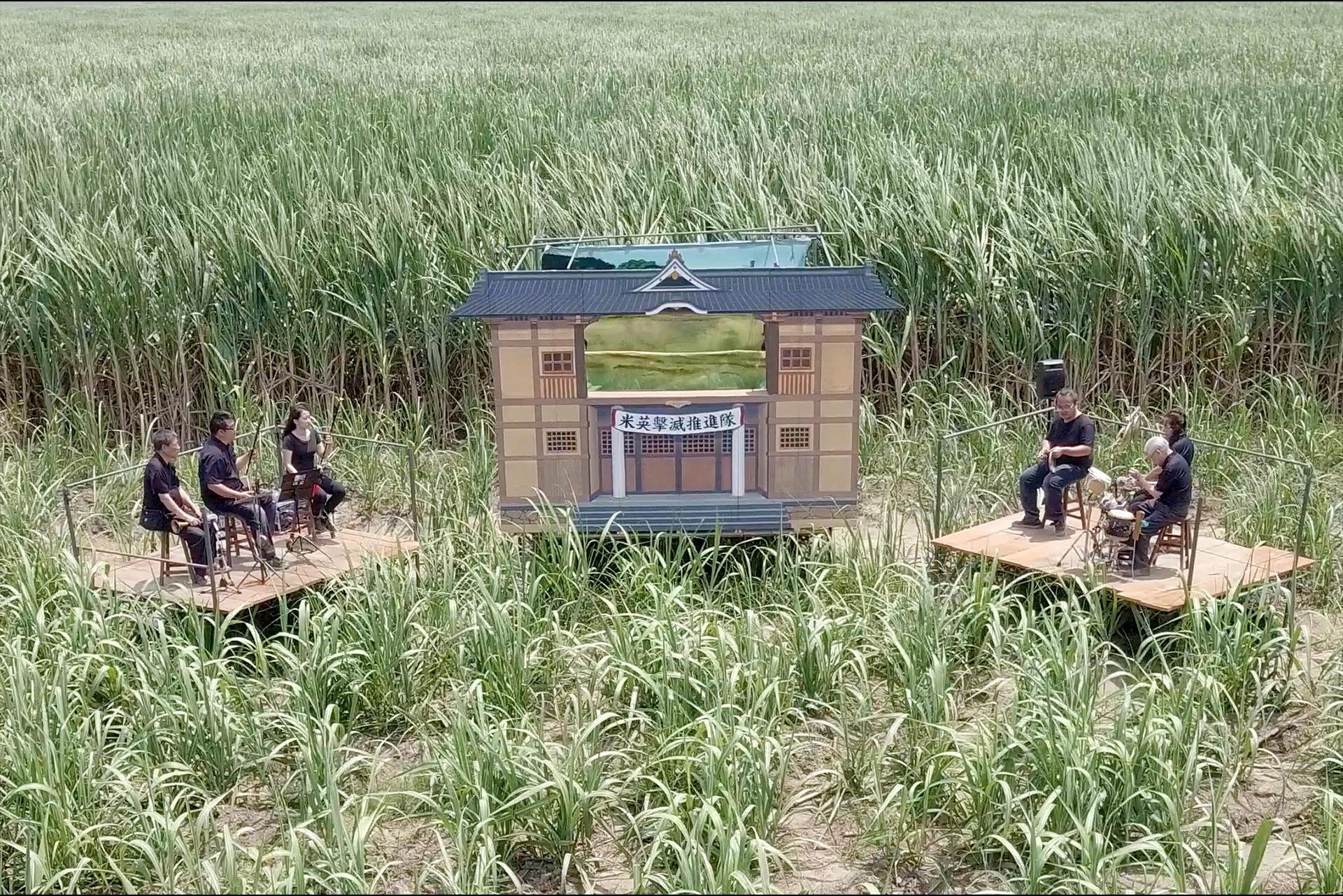
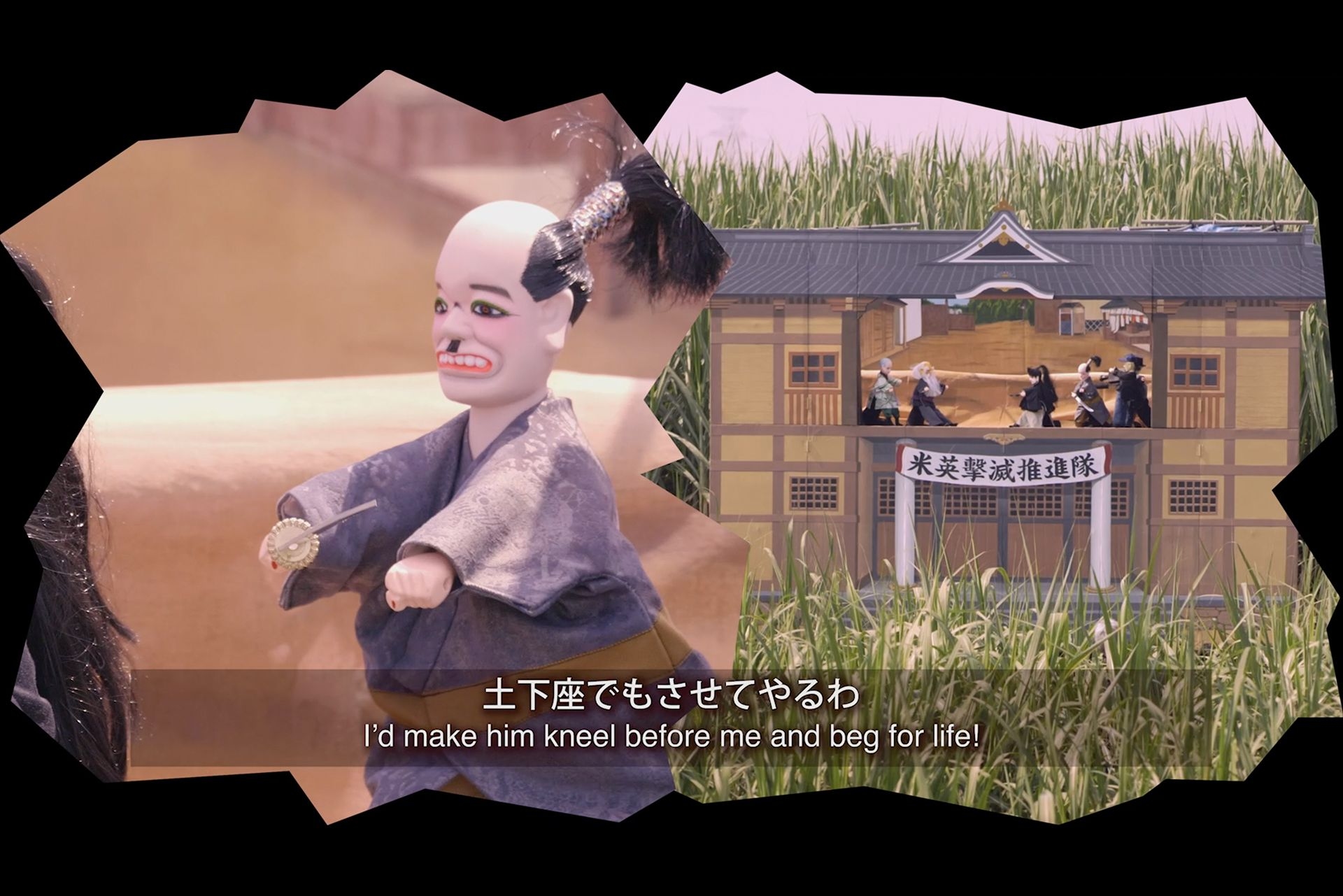
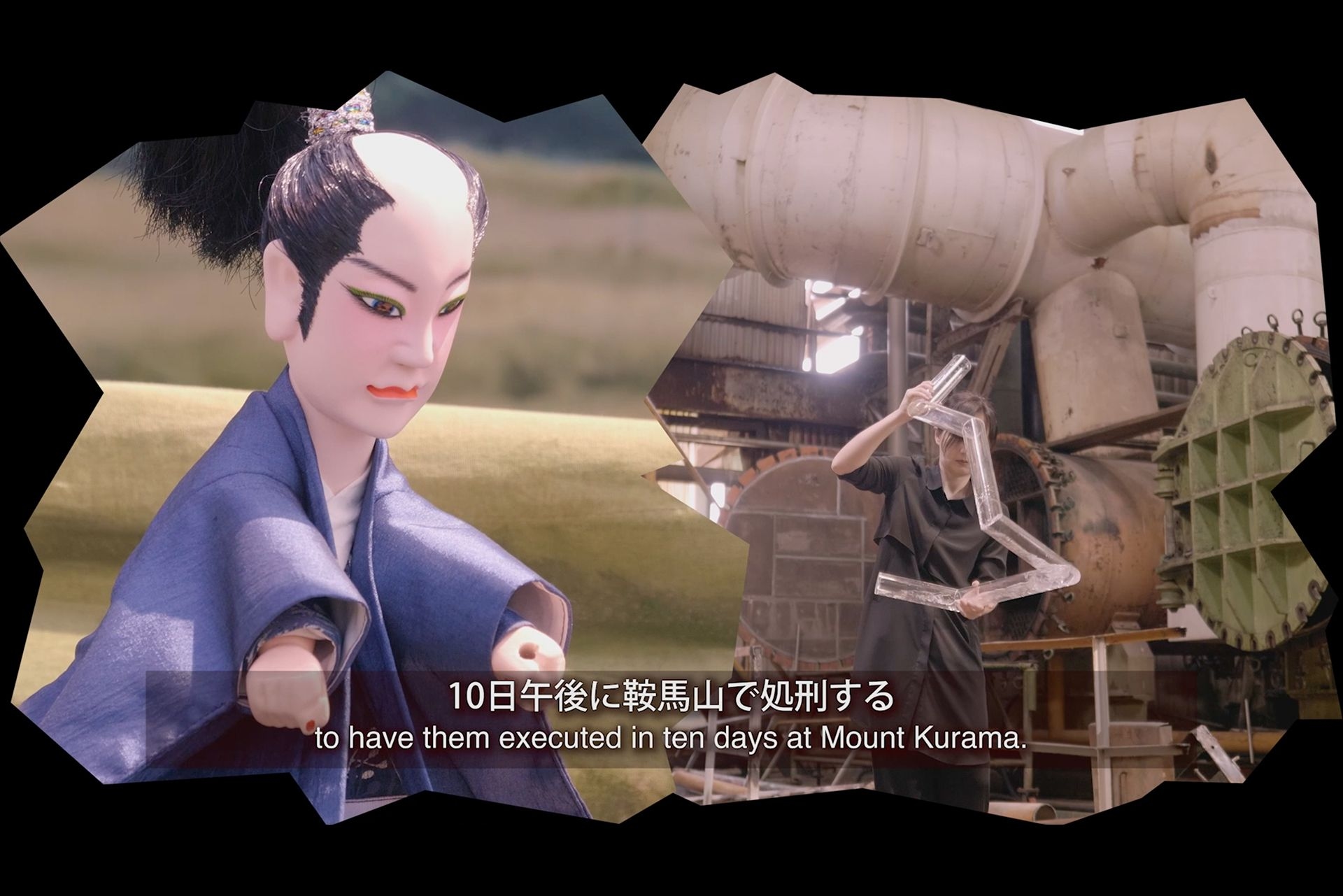
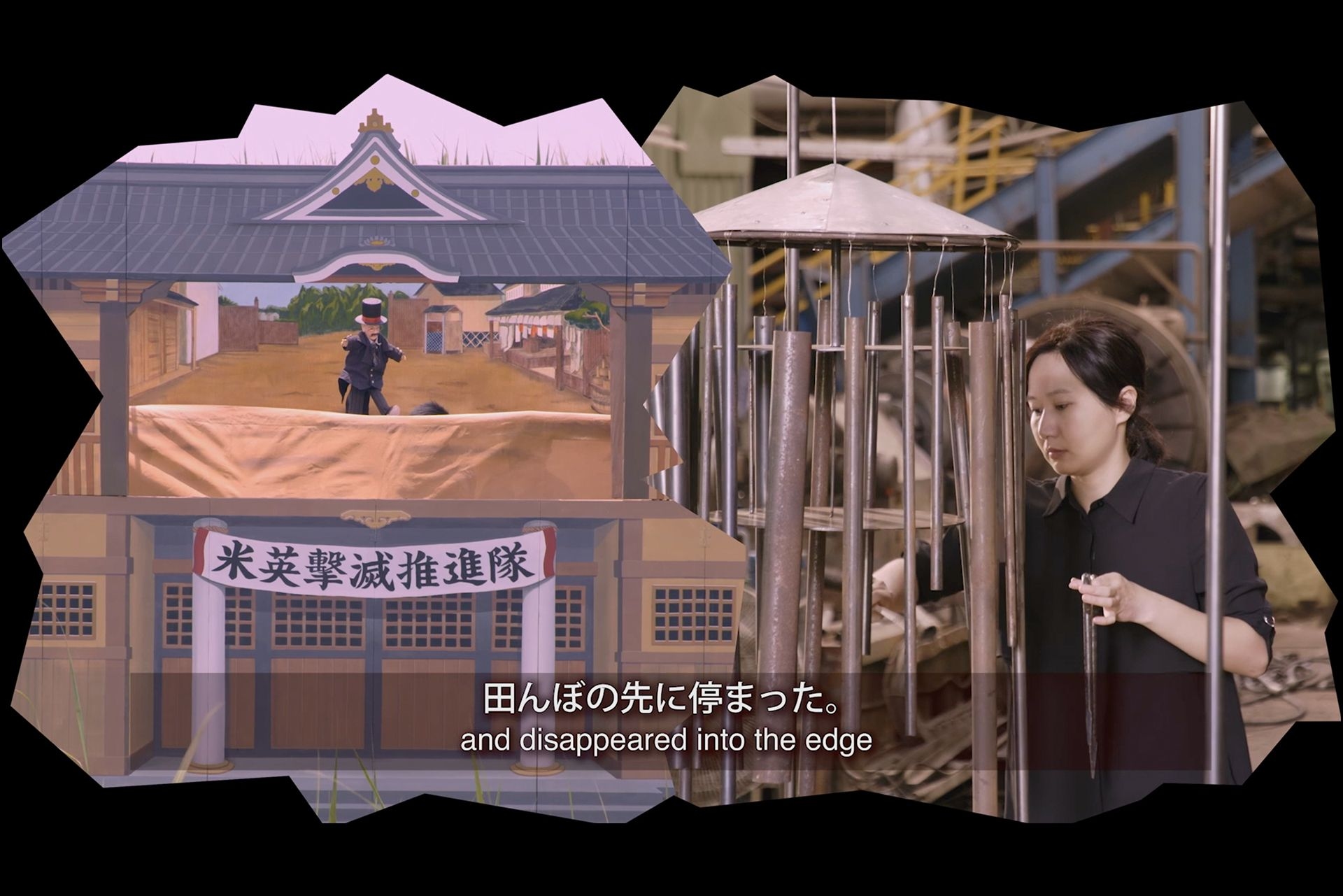
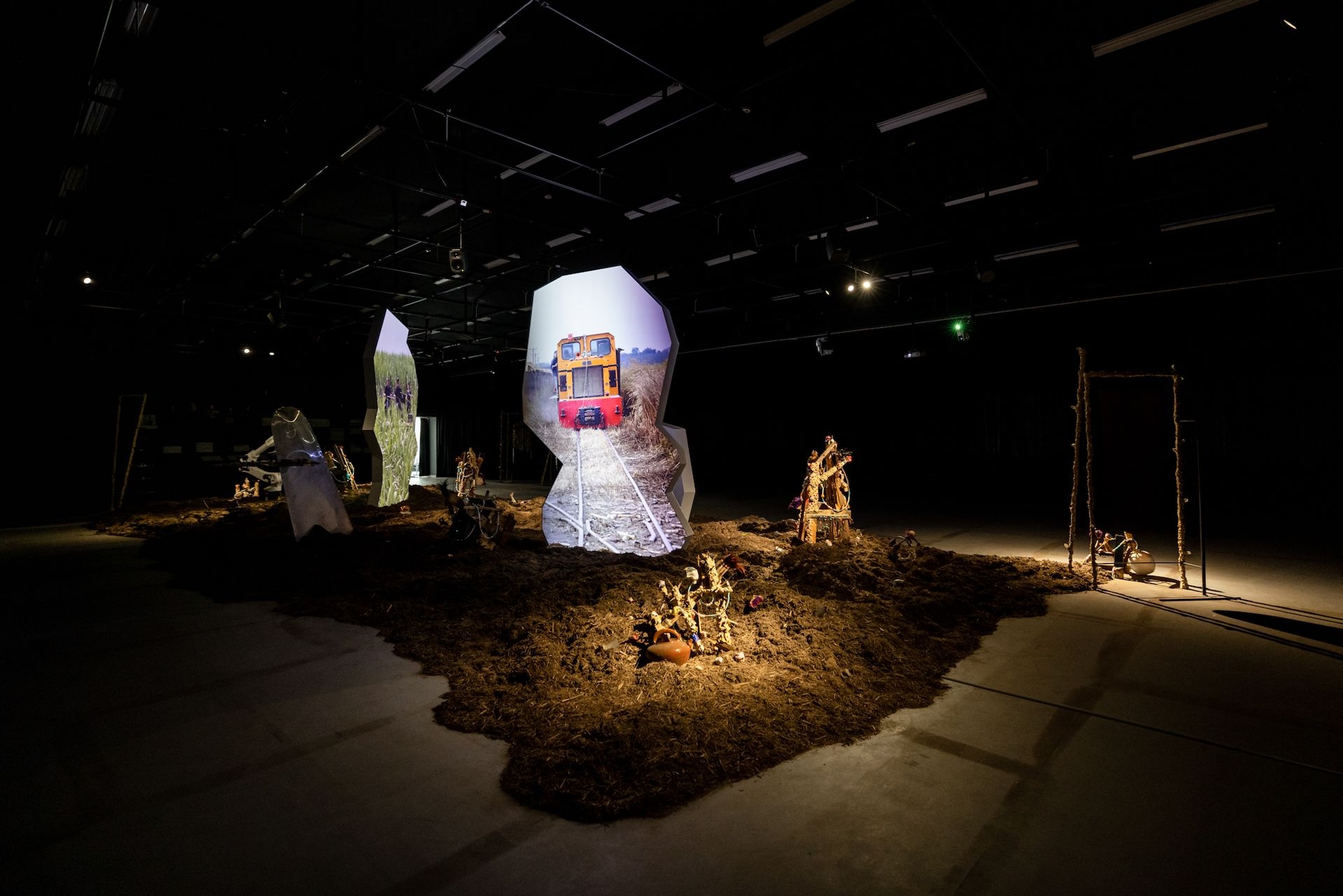
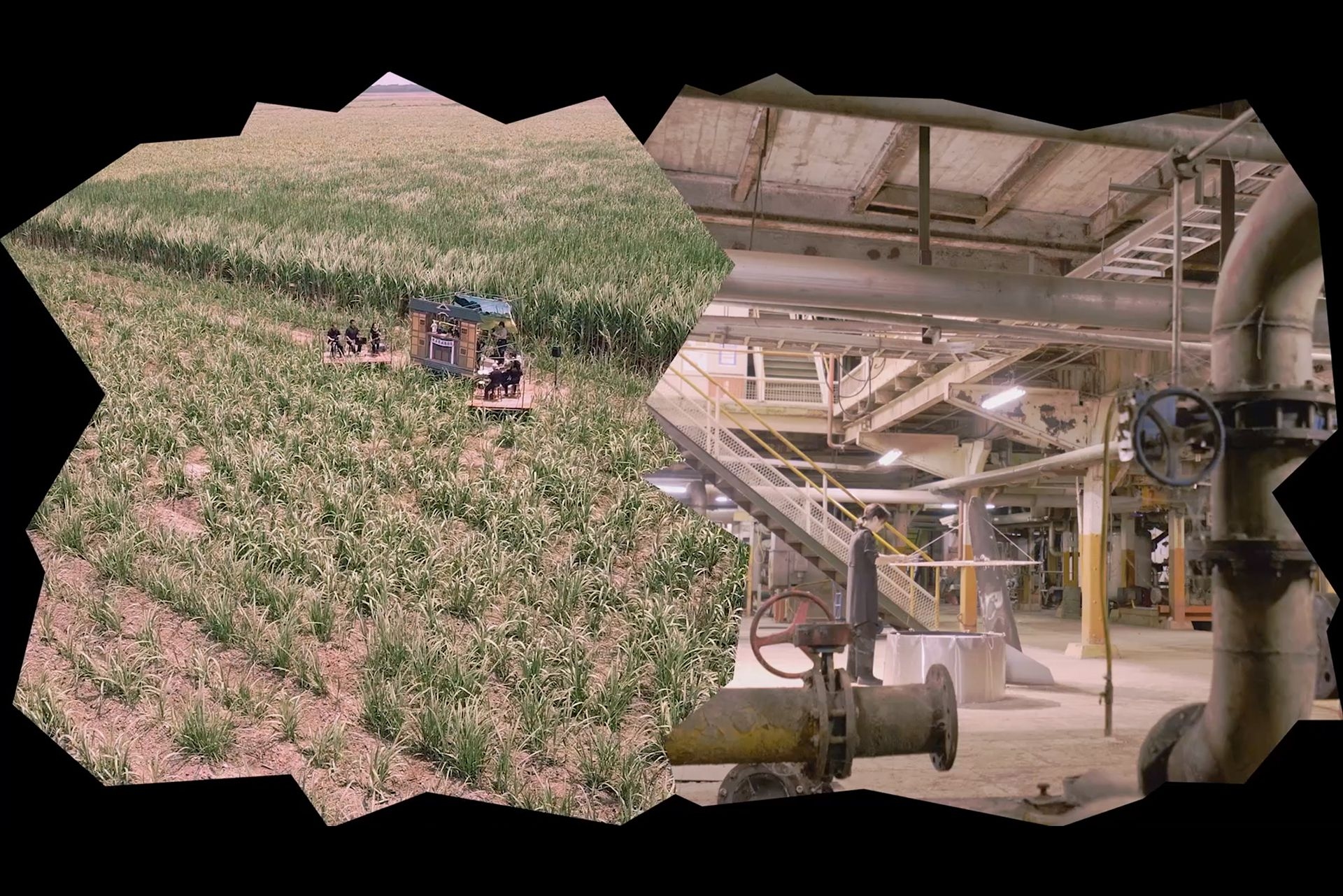
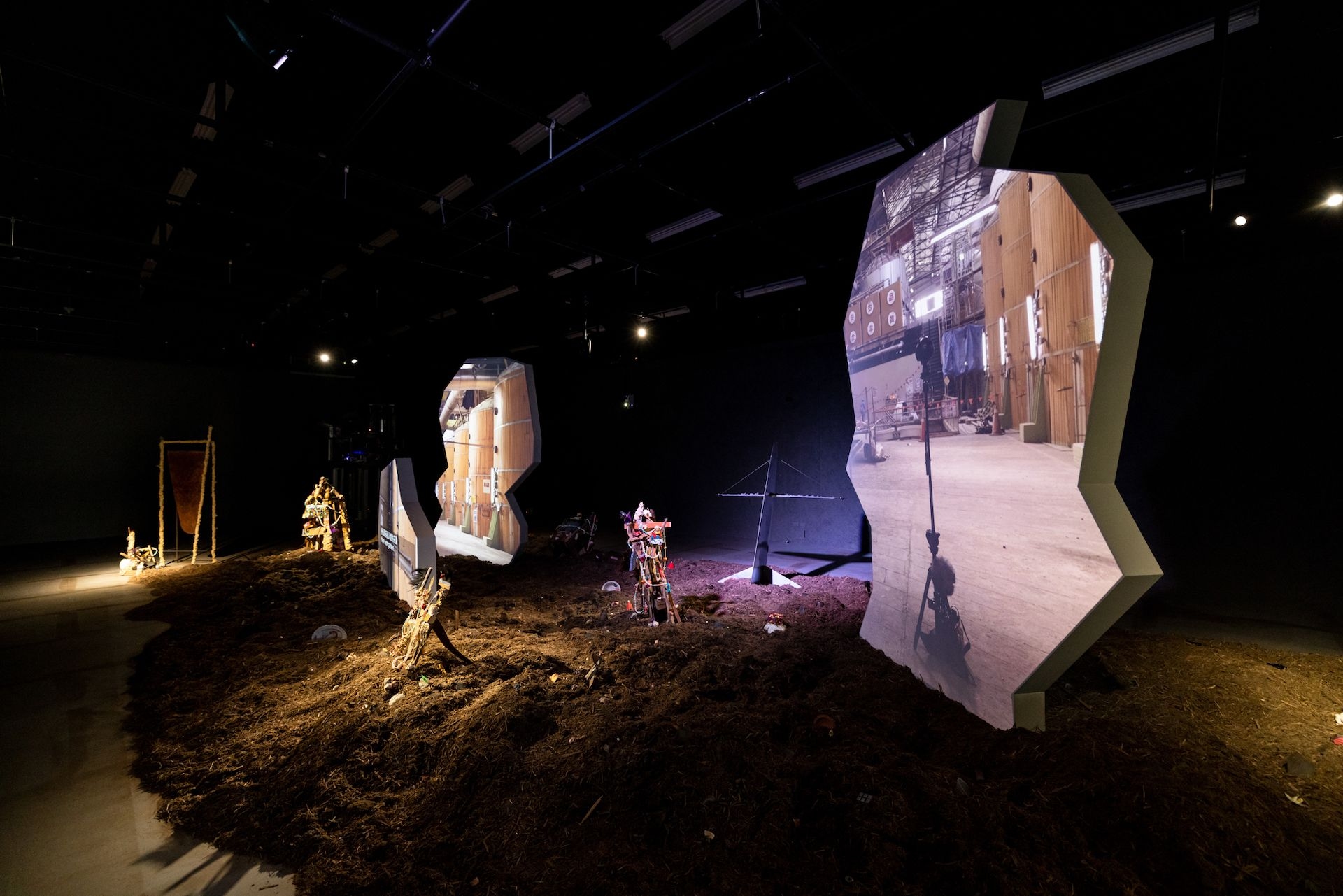
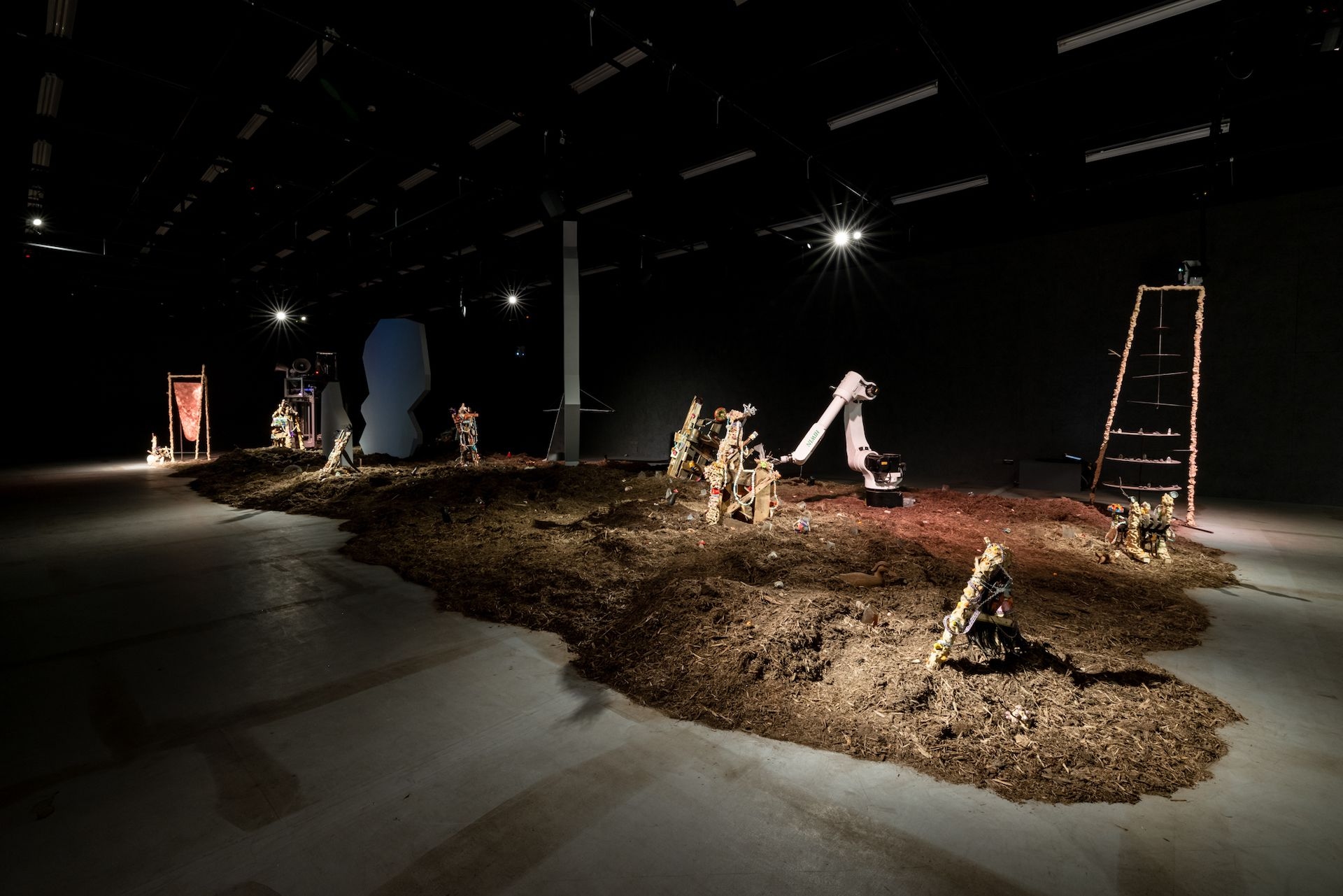
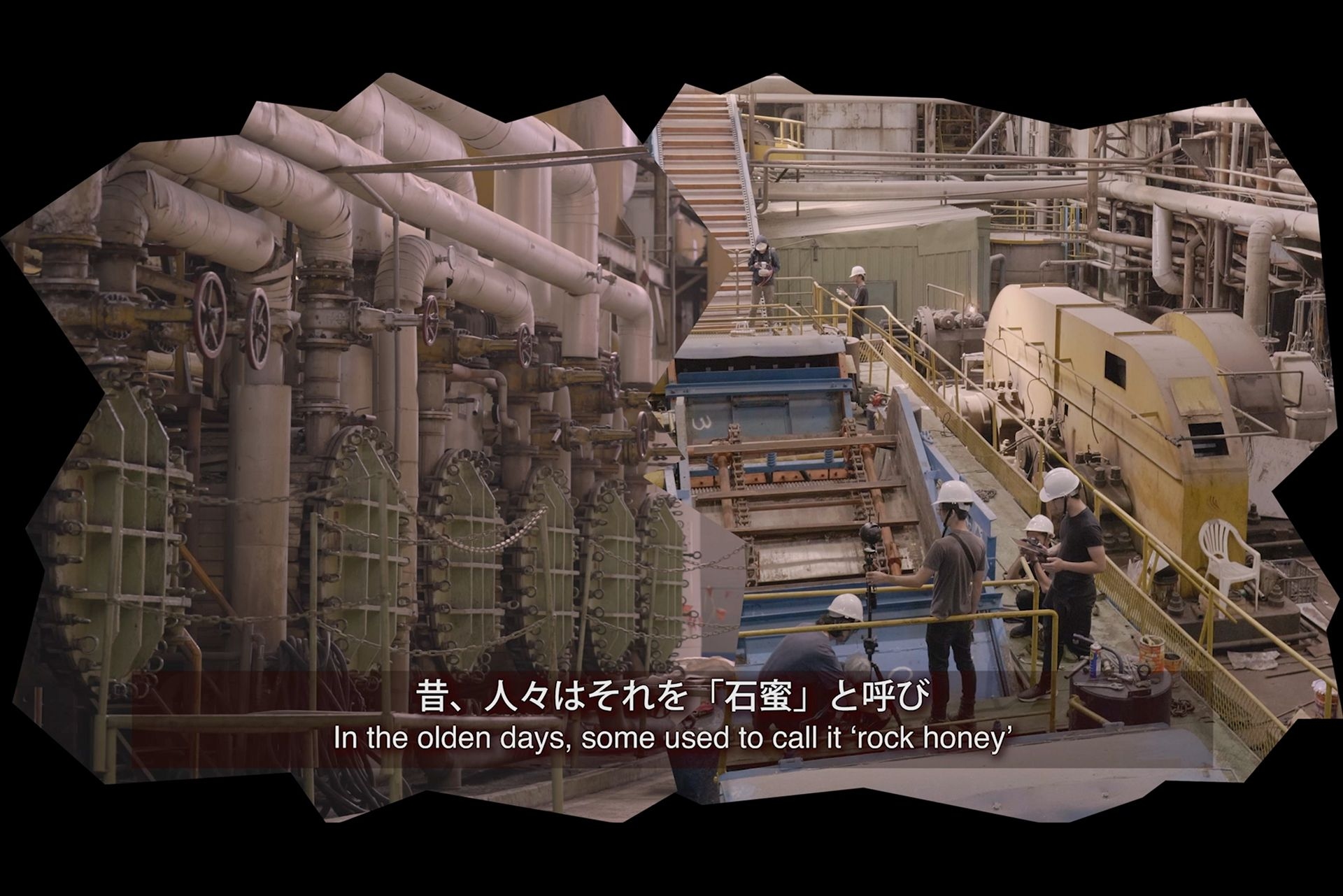
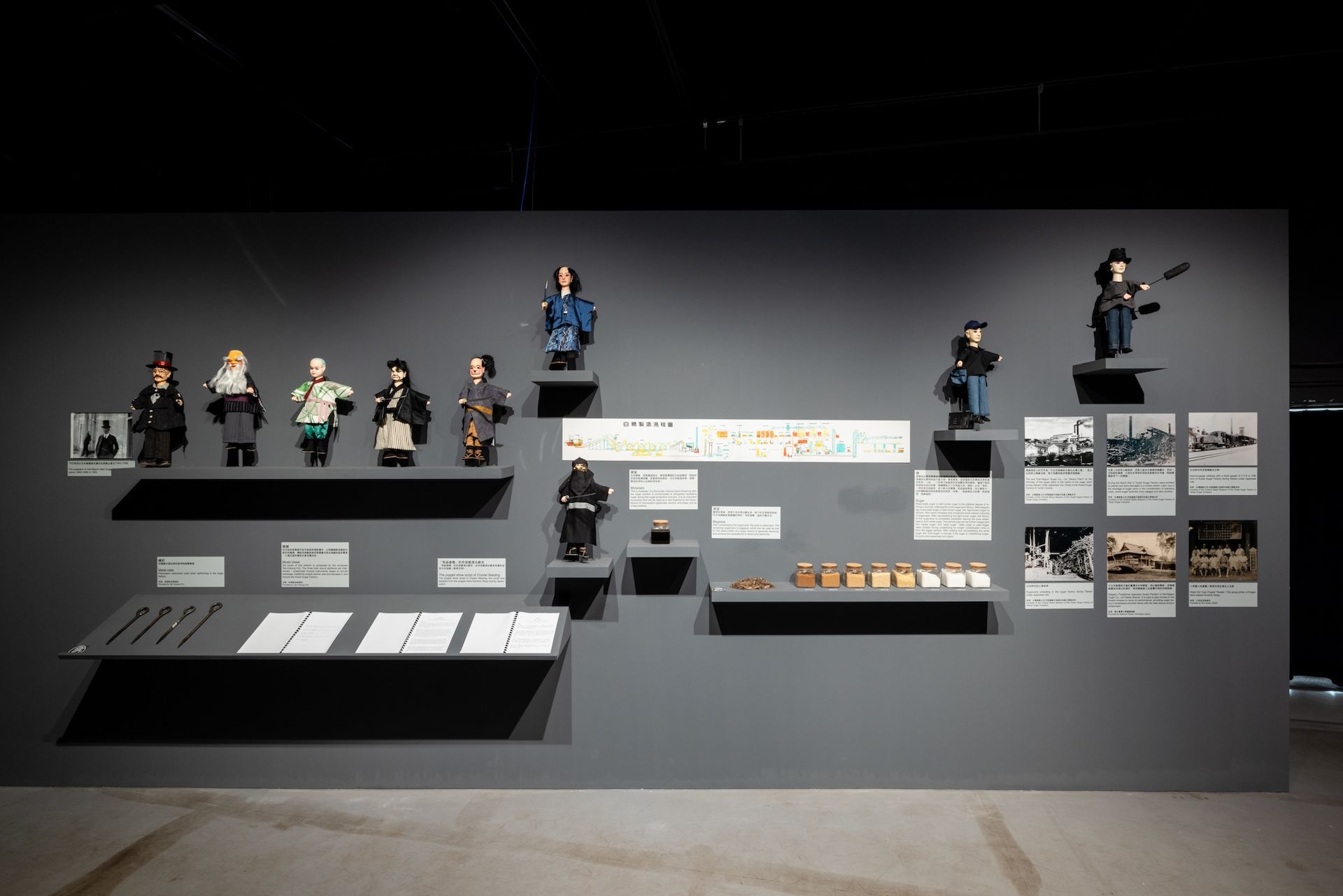
In this project, the artists combined new technologies with folk tradition, blending puppetry, experimental music, and robotic arms to unravel Huwei's hundred-year history in a complex international network. The narrative in the video was adapted from the Japanized puppet show "Kurama Tengu," performed by the Sheng Ping Puppet Troupe. The video also features composer Tak-Cheung Hui playing music inside the Huwei Sugar Factory, transforming the factory into a local "instrument." In the exhibition, which resembles an automatic theater, the multi-channel video installation, lighting, sound, and robotic arms have all become actors in this play. They enter and exit the stage as the story unfolds, serving and portraying different “roles” and “incidents''.

Huwei Township

Huwei Township, formerly known as "Dalongjiao," is located in Yunlin County, Taiwan, with a population of approximately 70,000, making it the second largest administrative district in Yunlin County. During the Qing Dynasty in the 18th century, the area was called "Dalongjiao" due to the undulating terrain resembling hills and ridges. In the early years of the Japanese occupation, Fujian immigrants came here to develop the land and built a tribe called "Wujiancuo" in the northeast of the area. Later, the "Dai-Nippon Sugar Manufacturing Co., Ltd." established a factory here, and because the Japanese words for "hou" and "hu" were similar in sound, the town was renamed "Huwei."

During the Japanese occupation, with the establishment of sugar factories, Huwei Township began to expand its transportation infrastructure. The establishment of the Huwei County Office in 1920 led to the commercial development of the town, while the flat terrain and the construction of water conservancy projects such as the Jiannan Canal gradually led to the prosperity of agriculture. As a result, Huwei Township became the second largest commercial center in Yunlin County. During World War II, Huwei was the location of military facilities such as airfields and alcohol factories, which led to devastating bombing by the American military.

After the war, due to Taiwan's industrial relocation and the decline of the sugar industry, Huwei Township faced long-term economic decline and population migration. Despite this, in recent years, the economic structure of Huwei has gradually shifted, and with the completion of the Yunlin Station of the Taiwan High-Speed Rail and the Huwei Park of the Central Taiwan Science Park, Huwei Township has gradually regained its vitality of previous years.

The streets in the Huwei Sugar Refinery employee dormitory area are spacious and orderly, influenced by the concept of English garden communities. Dai-Nippon Sugar Manufacturing Co., Ltd. attached great importance to community greening. The towering Macaranga trees separated the black smoke and bagasse generated during sugar production, providing employees with relief from air pollution. Before World War II, Huwei was known as the most modern town in southern Taiwan.

Huwei Sugar Factory

The Huwei Sugar Refinery, also known as the Huwei Sugar Factory, is one of only two remaining sugar refineries operated by Taiwan Sugar Corporation, the other being the Shanhua Sugar Refinery. The refinery was established by Dai-Nippon Sugar Manufacturing Co., Ltd. in 1906, and the first factory officially commenced operations in 1909 with an initial crushing capacity of 1,700 metric tons (Machine A). The second factory was constructed in 1912 with a crushing capacity of 1,600 metric tons. In 1924, the refinery expanded its equipment in the first factory (Machine B), increasing the total crushing capacity of the Huwei Sugar Refinery to 4,900 metric tons, making it the highest-capacity sugar refinery in Taiwan. In 1925, the largest alcohol plant in the Orient was established, and in 1937, an anhydrous alcohol production facility was added.

In addition to building railways, Dai-Nippon Sugar Manufacturing Co., Ltd. operated the Huwei Sugar Refinery and placed great emphasis on community planning to ensure the quality of life for Japanese employees. The nearby Japanese-style architecture formed a unique new community, which included a train station, hospital, park, school, market, library, art and cultural center, shrine, club, cafeteria, Western-style buildings, and employee dormitories of various job positions, providing all necessary daily necessities and leisure activities.

The streets in the Huwei Sugar Refinery employee dormitory area are spacious and orderly, influenced by the concept of English garden communities. Dai-Nippon Sugar Manufacturing Co., Ltd. attached great importance to community greening. The towering Macaranga trees separated the black smoke and bagasse generated during sugar production, providing employees with relief from air pollution. Before World War II, Huwei was known as the most modern town in southern Taiwan.

Anhydrous Alcohol Production

In 1906, Taiwan Sugar Corporation successfully developed a by-product of sugar production called "molasses," which could be used as a raw material to produce alcohol. This greatly increased the value of molasses, which was no longer considered a difficult-to-handle waste product. Following Japan's fuel policy, Taiwan Sugar Corporation utilized the leftover molasses from sugar production to extract anhydrous alcohol, which served as fuel during wartime.

The alcohol produced by Huwei Sugar Factory was once the largest and highest quality in Taiwan, and the largest in the Orient. Its predecessor was the Huwei Alcohol Plant of Dai-Nippon Sugar Manufacturing Co., Ltd., which was established in 1926 and began producing alcohol in November of the same year. Its annual output reached 6,600 tons, making it the highest quality and highest output in Taiwan at the time. As the end of World War II approached, Japan faced severe shortages of essential materials, especially oil. To overcome this problem, Japan developed and manufactured high-purity alcohol through sugar factories to be used as fuel for airplanes and vehicles. As a result, sugar factories became targets of Allied bombing and suffered severe damage during the war.

The Kobiki Naval Aviation Corps

The Kobiki Naval Aviation Corps (Kobiki Kaigun Kōkūtai) was one of the Imperial Japanese Navy aviation units and training institutions during the Japanese rule. After the outbreak of the Pacific War, it was established as a basic training unit to produce a large number of aviation personnel. Following the outbreak of the Pacific War, the Navy's aviation education institutions expanded and training aviation units were established in various places to conduct basic training for pre-course graduates. The Kobiki Air Unit was established on May 15, 1944, at the Kobiki Airfield in the outskirts of Kobiki Town, Tainan Prefecture.

The Kobiki Naval Aviation Corps faced difficulties due to a shortage of aircraft, fuel, and personnel and was disbanded in 1945. Some of the remaining members were transferred to the "Chūsei-tai" (Loyalist Corps), a special attack unit formed by Taiwan forces. In May 1945, the 132nd Naval Aviation Middle Training Unit (Ryūko-tai), based at the Kobiki Airfield, was established with three squadrons, each consisting of eight aircraft using the base's Type 93 training aircraft equipped with bombs. They flew via the Yilan Airfield and Ishigaki Base to the Miyako Island Base, where they conducted a night special attack in the waters near Miyako Island. On May 28 of the same year, at 5:30 pm, nine training aircraft from the 2nd Ryūko Squadron took off from the Kobiki Airfield for a special attack, and at 7:20 pm the same day, they arrived at the Yilan Airfield. On June 1, while en route to Ishigaki Island, they encountered a storm, and seven of the aircraft made an emergency landing on the island of Nakanoshima, causing heavy damage to their aircraft. Only one aircraft reached Ishigaki Island, but it crashed due to a fuel pump failure after takeoff on June 9, causing the plane to be destroyed, and resulting in the destruction of all aircraft of the 2nd Ryūko Squadron.

Taiwanese puppetry

Yunlin is an important agricultural town in Taiwan and a significant location for traditional puppetry culture, with puppetry master Huang Junxiong coming from Huwei. Puppetry, also known as hand puppetry, got its name from the shape of the puppets, which resemble cloth bags and are manipulated by hand. Puppetry originated in the late Ming and early Qing dynasties and is the most common form of folk drama in Taiwan.

Taiwanese puppetry was introduced from the southern coastal regions of China, including Zhangzhou, Quanzhou, and Chaozhou in Guangdong. Early puppetry was divided into three types based on the background music: Nanguan, Beiguan, and Chaodiao puppetry. Later, elements of Beijing opera, Taiwanese opera, Japanese music, and Western music were also added. Puppetry performances can be divided into external and internal stages. External puppetry is mainly performed at temple festivals and is currently the most common type of performance, usually staged twice a day. Internal puppetry is performed in theaters for ticket sales, where the puppets are enlarged and the colors are more vivid, and mechanical backdrops are added to attract more audiences.

Puppetry performances consist of a front-stage performer and a back-stage musician. The front-stage includes a lead performer and a supporting performer. The lead performer, also known as the "head puppeteer," is responsible for voicing and manipulating the puppets, and is the soul of the puppetry performance. The supporting performer, also known as the "second puppeteer," assists in puppet manipulation and is responsible for "walking the stage" (picking up props). The back-stage generally consists of 4 to 7 people, and the martial music instruments include drums, gongs, and cymbals, while the literary music instruments include flutes, whistles, vertical flutes, coconut fiddles, sanxian, and electric guitars. Traditional puppetry stages are called "colorful buildings," which are carved from wood and combined into exquisite and gorgeous carved artworks.

Modern puppetry stages are made of American boards or cloth curtains and painted with fluorescent paint. Puppetry scripts can be broadly classified into historical plays (adapted from historical novels), public case plays (stories of various dynasties and the Qing Palace's pardoning of innocent people, such as Bao Gong's case, Shi Gong's case, and Peng Gong's case), love and ethics plays (stories of romantic love and family ethics), swordplay plays (stories of knights), and mythical plays (stories of gods and immortals, such as Journey to the West, Fengshen Yanyi, and Jigong Zhuan).

Japanization of Taiwanese Puppetry

In the 1930s, Japan advocated the "Southern Expansion" policy in an attempt to take control of the South Pacific and Indochina. Under this national policy, Taiwan was seen as an important strategic gateway to the South Pacific. In September 1936, Admiral Kobayashi Seizo was appointed as the Governor-General of Taiwan, ending the era of civil governors, and proposed the three major policies of "Japanization, Industrialization, and Southern Expansion." The policy began to strengthen the loyalty of the colonized local population and mobilize resources to support military expansion.

The Japanization movement was a comprehensive policy of the central and local governments, aiming to transform the Taiwanese people into subjects of the empire. As part of this movement, traditional customs and practices such as Buddhist and Taoist temples, traditional puppet theater, and wedding and funeral customs were reformed, and many temples were demolished. The use of traditional drum music was also prohibited, greatly affecting the performances of puppetry shows. After the outbreak of the Sino-Japanese War in 1937, various government agencies used social education as an excuse to prohibit the performance of Taiwanese theater and crack down on private theater troupes. The traditional puppet shows and opera performances, which were once popular in Tamsui, were banned.

At that time, puppetry shows also underwent drastic changes. In addition to using Japanese stories, many innovations that were completely different from the original were introduced. For example, Western instruments and Asian records were used for music accompaniment, Japanese-style and local-style puppet costumes were sewn, a dedicated Japanese language commentator was appointed, and the stage settings used three-dimensional combination scenery, with faster scene transitions. The plays in Imperialization puppetry shows were often based on Japanese scripts such as "Kurama Tengu", "Sarutobi Sasuke", "Mito Kōmon", and "Blood-stained Lighthouse", and the puppets were mostly dressed in Japanese attire. The performances were in Japanese. Although this type of Imperialization puppetry was not widely accepted by the Taiwanese due to language and cultural barriers, some of its performance techniques have had a lasting influence on the puppetry shows that followed.

↓ scroll down for video

本作品為許家維、張碩尹、鄭先喻共同創作(依姓名筆畫順序) The artwork is co-created by Hsu Chia-Wei, CHANG Ting-Tong and CHENG Hsien-Yu (under Chinese alphabetical precedence)

劇本改編自Based on the story:皇民化布袋戲《鞍馬天狗》Puppetry during Japanization Kurama Tengu| 編劇Screenwriter:林政興LIN Zheng-Xing、張碩尹CHANG Ting-Tong、許家維Hsu Chia-Wei| 糖廠室內表演者Sugar Factory Indoor Performer:余若枚: YU Run-Mei|

布袋戲表演團隊Puppetry Perform Team:昇平五洲園Sheng Ping Puppet Troupe| 團長Leader:林政興LIN Zheng-Xing| 主演Cast:林政興 LIN Zheng-Xing| 操偶師Puppeteer:林政權LIN Zheng-Quan、林坤寶LIN Kun-Bao、陳憲忠CHEN Xian-Zhong、廖先敏LIAO Xian-Ming、廖穎毅LIAO Ying-Yi、鍾明良ZHONG Ming-Liang| 服裝設計Costume Designer:林佩瑜LIN Pei-Yu| 司鼓Drum:朱南星ZHU Nan-Xing| 鑼鈔GONG:李慧珍LI Hui-Zhen、廖冠評LIAO Guan-Ping| 嗩吶Suona:吳清秀WU Qing-Xiu| 三弦Sanxian:蔡亞霖CAI Ya-Lin| 二胡Erhu:李亭萱LI Ting-Xuan|

聲音共製Sound Co-production:C-LAB台灣聲響實驗室C-LAB Taiwan Sound Lab、台藝大聲響實驗中心Center for Sound Arts and Acoustics Research, National Taiwan University of Arts| 導演Director:許家維Hsu Chia-Wei| 聲響製作總監Sound Director:林經堯LIN Jing-Yao| 影片拍攝執行製作On-Site Line Producer:郭宇庭Elvis KUO、黃惠婷Fay HUANG、徐元彥HSU Yuan-Yen| 作曲:許德彰HUI Tak-Cheng| 作曲助理:區志桓AU Chi-Sang| 攝影指導Director of Photography:張能禎CHANG Neng-Zen| 攝影師Cinematographer:凌瑋隆LIN Wei-Lung、蔡弦剛TSAI Hsuan-Kan、潘彥安PAN Yen-An| 燈光師Gaffer:洪政献HUNG Yu-Chi| 燈光助理Best Boy:王錚WANG Cheng| 空拍師Aerial Photography:陳偉勝Wyeson Tan、攝視度影像有限公司VACs-Joseph CI、齊培丞| 現場收音師On-site Sound:馮志銘FENG Zi-Ming、丁啟祐DEAN Chi-You、徐元彥HSU Yuan-Yen、高勤倫Vince KAO| 360度環景拍攝Panorama:黃昱琪HUANG Yu-Chi、黃郁傑HUANG Yu-Jie、洪譽豪HUNG Yu-Hao| 收音助理Boom Operator:戴向諶Immanuel DNENBRING| 樂器設計Instrument Designer:張碩尹CHANG Ting-Tong、陳亮融CHEN Liang-Jung| 樂器製作Instrument Maker:許少軒HSU Shao-Hsuan、徐瑞謙HSU Jui-Chien| 布袋戲佈景師Puppetry Scenic Artist:楊子逸YANG Tzu-Yi、金祺龍JIN Chi-Lung| 置景設計Set Designer:許紹軒HSU Shao-Hsuan、劉文豪LIU Wen-Hao、謝其軒HSIEH Chi-Hsuan|

行政製作Executive Producer:李雅婷Leah LEE| 日文錄音製作執行Japanese ADR Producer:Saki TANAKA| 日文配音員Japanese Voice Actor:Tatsuo INOUE| 日文錄音師Japanese Recorder:Ryota FUJIGUCHI| 日文翻譯Japanese Translator:Kaoru UEDA| 英文翻譯English Translator:李曉瑋Wei LEE| 影片剪輯Film Editor:許家維Hsu Chia-Wei| 聲音設計Sound Designer:許德彰HUI Tak-Cheung| 後期混音Sound Mixer:許德彰HUI Tak-Cheung、複耳工作室Mothra Productions| 數位調光Colorist:楊子逸YANG Tzu-Yi|

展覽技術總監Exhibition Technical Director:鄭先喻CHENG Hsien-Yu| 展覽執行製作Exhibition Coordinator:廖音喬LIAO Yin-Chiao| 3D列印裝置製作3D Printing Machine Manufacturer:洽富科技有限公司CheerFour Technology co,. LTD.| 3D列印建模3d Modelling:台藝大科技藝術實驗中心Digital Art Education Cen her, National Taiwan University of Art、郭岱維KAO David| 投影設計Mapping Designer:鄭先喻CHENG Hsien-Yu| 機械手臂提供Robotic Arm Supplier:上銀科技股份有限公司HIWIN Technologies Corp.| 設備贊助Equipment Support:台北數位藝術中心Taipei Digital Art Center|

拍攝協力Filming Cooperation:台灣糖業股份有限公司虎尾糖廠Taiwan Sugar Coporation Huwei Sugar Factory| 特別感謝Special Thanks:賴俊良LAI Chun-Liang、財團法人中央廣播電台Radio Taiwan International、李天祿布袋戲文教基金會Li Tien-Lu Hand Puppet Foundation、雲林縣政府文化觀光處Cultural Affairs Department, Yunlin Country Government| 本作品獲文化部109年度科技藝術創作發展計畫補助 This work has been granted a subsidy of 2020 Technological Art Creation Development Program from the Ministry of Culture

評論 ↓↓↓
在虎尾糖廠的藝術計畫— 張碩尹的《肥皂》與《等晶播種》
C-LAB 未來媒體藝術節 虛實並進想像未來
化身劇目演員的機械手臂與3D列印裝置
建構臺灣科技藝術主體新敘事:C-LAB未來媒體藝術節
「2021 C-LAB 聲響藝術節:Diversonics」呈現聲響的多元樣貌